RaY-World
Tamil-first cinema

Searching best server...
From bootlegger to convict, to millionaire pornographer, to born-again Christian, to paraplegic gunshot-victim, Larry Flynt's life so far has been anything but ordinary. As the founder and publisher of Hustler Magazine Flynt broke new ground in porn publishing, offering filth and debauchery of a sort hitherto only imaginable. In his life Larry Flynt has always courted controversy, and along the way he's made himself the enemy of millions. But Larry Flynt always seems to come out on top. This comprehensive portrait follows Flynt from his dirt-poor Appalachian childhood to his surprising role as a poster-boy for First Amendment rights. Rare footage documents the defining moments in his life, from the launch of Hustler in 1974 to his landmark Supreme Court victory over Moral Majority head Jerry Falwell. In a moving interview, Flynt recalls his long and painful recovery from the assassination attempt that nearly took his life, and the tragic death of his wife. From selling moonshine to his dad to the controversial film that cemented his place in folklore, this is the controversial saga of Larry Flynt.
From bootlegger to convict, to millionaire pornographer, to born-again Christian, to paraplegic gunshot-victim, Larry Flynt's life so far has been anything but ordinary. As the founder and publisher of Hustler Magazine Flynt broke new ground in porn publishing, offering filth and debauchery of a sort hitherto only imaginable. In his life Larry Flynt has always courted controversy, and along the way he's made himself the enemy of millions. But Larry Flynt always seems to come out on top. This comprehensive portrait follows Flynt from his dirt-poor Appalachian childhood to his surprising role as a poster-boy for First Amendment rights. Rare footage documents the defining moments in his life, from the launch of Hustler in 1974 to his landmark Supreme Court victory over Moral Majority head Jerry Falwell. In a moving interview, Flynt recalls his long and painful recovery from the assassination attempt that nearly took his life, and the tragic death of his wife. From selling moonshine to his dad to the controversial film that cemented his place in folklore, this is the controversial saga of Larry Flynt.
Celebrate the life and career of the larger‑than‑life character actor best known as the lovable, sharp‑tongued Grandpa Munster. The episode traces Lewis’s early years in New York, his eclectic path through vaudeville, radio, and stage work, and the distinctive personality that made him unforgettable both on and off camera. Biography explores how The Munsters cemented his place in pop culture, yet only hinted at his wide‑ranging talents — from political activism to restaurant ownership to his later work in film and television. Interviews with friends, colleagues, and family reveal a man who embraced eccentricity, championed social causes, and maintained a fierce loyalty to his fans. Ultimately, the program paints a warm portrait of an entertainer whose humor, heart, and unmistakable presence ensured he would always be remembered as “Grandpa,” but was so much more.
From the first boycott he organized in 1933 to his rise through the ranks of the Teamsters union, Jimmy Hoffa was a visionary labor leader whose mysterious 1975 disappearance left his legacy forever shrouded in mystery. In this captivating Biography, delve into the story of the young coal miner's son from Indiana whose natural-born leadership put him at the forefront of creating of one the most powerful unions of the 20th century. Hoffa's infamous mob dealings have been attributed to his rapid rise to power - as well as to his puzzling demise - while at home, according to interviews with son James P. Hoffa and daughter Barbara Crancer, he remained a loving father and husband. Footage from Senate committee hearings with rival Robert F. Kennedy, and home videos highlight the dual nature of one of America's most complex and controversial icons.
Explore the life of the disciplined, determined commander who helped shape America’s modern military identity. The episode traces Pershing’s rise from a Missouri schoolteacher to a respected officer whose early frontier service and leadership in the Spanish‑American War and the Philippines earned him national attention. Biography explores his pursuit of excellence, his strict standards, and the personal tragedies — including the loss of his wife and children — that forged his steely resolve. The program highlights Pershing’s pivotal role in World War I, where he insisted on maintaining an independent American force and led the American Expeditionary Forces to decisive victories. Through archival footage, letters, and expert commentary, the episode paints a portrait of a commander whose toughness, integrity, and strategic vision earned him the title “The Iron General,” leaving a lasting imprint on U.S. military history.
Trace the life of the novelist whose compassionate eye and unflinching honesty made him one of the defining voices of 20th‑century America. The episode follows Steinbeck from his California childhood — where the landscapes and people of the Salinas Valley shaped his imagination — through his early struggles to find his literary footing. Biography explores how works like Of Mice and Men, The Grapes of Wrath, and East of Eden emerged from his deep concern for ordinary people and his belief in social justice. Through interviews, archival footage, and excerpts from his letters and journals, the program reveals Steinbeck’s complex personality, his journalistic ventures during World War II, and the acclaim that culminated in the Nobel Prize. Ultimately, the episode portrays a writer whose empathy, curiosity, and storytelling brilliance captured the American experience in all its hardship and hope.
Explore the life and legacy of one of the most compelling and debated figures in Christian history. The episode traces Mary’s journey from her presence in the Gospels — as a devoted follower of Jesus and witness to the Crucifixion and Resurrection — to the centuries of interpretation that alternately diminished and elevated her role. Biography examines how early church politics, cultural biases, and later legends shaped her image, casting her as sinner, saint, mystic, and even apostle. Through interviews with theologians, historians, and biblical scholars, the program highlights emerging research that challenges long‑held assumptions and restores Mary as a central figure in the early Christian movement. Ultimately, the episode presents a thoughtful portrait of a woman whose faith, resilience, and mystery continue to inspire and provoke discussion across generations.
He was a privileged youth who was drawn to Communism in France during the '50s. When he returned to his own country he led a violent brutal regime that saw more than a quarter of the population die. Along with Idi Amin, Pol Pot is one of the most brutal and hated leaders of modern history. His Khmer Rouge party was responsible for the death of between 1 and 4 million people through disease, starvation and execution. Biography traces his life and rule through interviews with those who knew him including former Khmer associates and friends from his radical days in Paris along with extensive footage from inside Cambodia and commentary from scholars, historians and biographers. Learn of his comfortable childhood and hear how the future murderer was known as a charming caring and intelligent young man. Explore the reasons for his transformation into a leader whose thirst for blood and vengeance still scars his country almost two decades after he was overthrown.
Examine the life of the enslaved woman whose story has reshaped our understanding of Thomas Jefferson and early America. The episode traces Hemings’s origins at Monticello, her complex family ties to the Jefferson household, and the circumstances that led to her long‑debated relationship with Jefferson. Biography explores how oral histories, documentary evidence, and later DNA testing challenged centuries of denial and brought new clarity to her role in Jefferson’s life and legacy. Through interviews with historians, descendants, and scholars, the program highlights Hemings’s resilience, the lives of her children, and the broader context of slavery that shaped their world. Ultimately, the episode presents a thoughtful, evidence‑based portrait of a woman whose story forces a deeper reckoning with American history and the people who lived it.
He put forth a brave face at Bull Run and led some of the most remarkable campaigns of the Civil War, and now the life of the man frequently sited as the Confederacy's premiere tactician is explored in this installment of the popular A&E series Biography. Stonewall Jackson made a name for himself in the Mexican American War before siding with the South in the American Civil War. A man who was always said to stand his ground no matter what the odds, the highly regarded Civil War leader was fatally wounded by his own men at Chancellorsville. When the smoke cleared on some of the bloodiest battlefields of the Civil War, Stonewall Jackson would go down in the history books as a fearless leader who never back down from a fight. Now, thanks to historic photographs and the accounts of numerous Civil War experts, the complete story of Stonewall Jackson comes to the screen in rich and vivid detail.
Trace the life of the glamorous, resilient actress who moved effortlessly between Hollywood spectacle and television fame. The episode follows De Carlo from her early years in Vancouver and her determined pursuit of stardom to her breakthrough as a Technicolor beauty in adventure films and musicals of the 1940s and ’50s. Biography explores how she balanced exotic screen roles with genuine acting talent, earning admiration for performances in films like Salome, Where She Danced and The Ten Commandments. The program also highlights her reinvention as Lily Munster, a role that brought her enduring pop‑culture recognition and showcased her comedic warmth. Through interviews, archival footage, and personal reflections, the episode paints a portrait of a versatile performer whose grace, humor, and perseverance made her far more than Hollywood’s “gilded lily.”
Chronicles the life of the driven, uncompromising visionary who built one of the most legendary names in automotive history. The episode traces Ferrari’s early years in Modena, his rise as a race‑car driver, and his transition to team manager, where his fierce competitive spirit shaped the Scuderia’s identity. Biography explores how Ferrari’s obsession with engineering excellence and racing dominance led to the creation of the iconic Ferrari marque, blending performance, innovation, and unmistakable style. Through interviews, archival footage, and accounts from drivers and historians, the program highlights his complex personality — demanding, private, and relentless — as well as the triumphs and tragedies that marked his career, including the pressures of Formula One and the loss of beloved drivers. Ultimately, the episode presents a portrait of a man whose lifelong pursuit of speed and perfection left an indelible mark on motorsport and automotive design.
Examine the rise, power, and enduring influence of one of the most formidable organizations in American organized crime. The episode traces the family’s origins under Charles “Lucky” Luciano, whose restructuring of the Mafia in the 1930s laid the foundation for the Genovese family’s dominance. Biography follows the ascent of Vito Genovese, a shrewd and ruthless figure whose ambition reshaped the family’s operations and expanded its reach into labor unions, gambling, and narcotics. Through interviews with historians, law‑enforcement officials, and journalists, the program explores the family’s secretive structure, its ability to survive internal rivalries, and its long‑running battles with federal investigators. Archival footage and case files reveal how the Genovese family became synonymous with organized crime’s quiet efficiency and ironclad discipline. Ultimately, the episode offers a stark portrait of a criminal dynasty whose influence cast a long shadow over American history.
Trace the journey of the filmmaker whose imagination reshaped modern storytelling and revolutionized the movie industry. The episode follows Lucas from his early days at USC, where his fascination with experimental film and technology took root, through the breakout success of American Graffiti, which opened the door to his most ambitious creation. Biography explores how Star Wars emerged from Lucas’s love of mythology, adventure serials, and cutting‑edge effects, becoming a cultural phenomenon that transformed Hollywood’s approach to blockbuster filmmaking, merchandising, and visual innovation. The program highlights Lucas’s founding of Industrial Light & Magic, Skywalker Sound, and Lucasfilm, revealing how his technical vision pushed cinema forward. Through interviews, archival footage, and personal reflections, the episode presents a portrait of a quiet, determined storyteller who built an entertainment empire and forever changed the landscape of popular culture.
Recount the turbulent life of the mob associate whose insider perspective later became the backbone of one of America’s most famous crime stories. The episode traces Hill’s youth in Brooklyn, where he was drawn to the glamour and power of the Lucchese crime family, and follows his rise as a trusted operative involved in hijackings, extortion, and the notorious Lufthansa heist. Biography explores the chaotic mix of danger, excess, and paranoia that defined Hill’s criminal career, as well as the mounting pressures that ultimately pushed him to cooperate with federal authorities. Through interviews, archival footage, and accounts from investigators, the program highlights Hill’s entry into the Witness Protection Program and the lasting cultural impact of his story, later immortalized in Goodfellas. The episode offers a vivid portrait of a man who lived fast, broke the rules, and paid the price.
Explore the life of the fearless, free‑spirited frontierswoman who became one of the most colorful legends of the American West. The episode traces Martha Jane Canary’s rough‑and‑tumble childhood, her early years as a scout and rider, and the bold personality that set her apart in a world dominated by men. Biography examines her reputation for sharp shooting, hard living, and tall tales — some true, some embellished — as well as her deep loyalty to friends and her complicated bond with Wild Bill Hickok. Through archival photographs, historical accounts, and expert commentary, the program reveals the contrast between Jane’s mythic image and the hardships she endured, including poverty, illness, and personal loss. Ultimately, the episode paints a vivid portrait of a woman whose courage, contradictions, and larger‑than‑life spirit secured her place in frontier folklore.
When appointed to Secretary of Defense at age 68, many critics claimed he was too old. Opinions changed after 9/11 when the tough‑minded leader directed the nation’s war on terror. Biography offers an intimate portrait of Donald Rumsfeld, from his childhood in Winnetka to his high‑powered position today. Trace his political life, from his election to Chicago congressman at 29 to “Rumsfeld’s Raiders,” an ambassadorship for NATO, and a spot as Gerald Ford’s trusted advisor. In the mid‑’70s, Rumsfeld tackled the corporate realm, making millions before returning to politics. His personal life is as interesting as his professional accomplishments, from running with the bulls in Pamplona to the courtship of his wife. Through rare footage, photographs, and candid interviews with friends and family—including Henry Kissinger and Donald himself—Donald Rumsfeld: Top Gun profiles one of the most powerful men in politics.
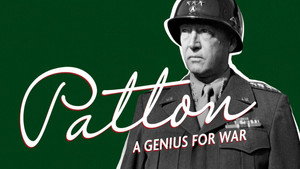
General George S. Patton was a walking, talking, fighting machine whose personality was bigger and noisier than one of his Sherman tanks. He was tough. He was vain. He was brilliant. And in a world gone mad with war, he was our greatest field commander. His slashing armored columns dismembered the panzers of Hitler's Thousand Year Reich with matchless thunder and dash. Passionate and arrogant, he slapped soldiers and cried over them; he was vilified and deified. But when it came time for the bloody business of war, George Patton had no peers. This revealing profile takes a look at the complex personality of the man who struck fear into Nazi generals and left Allied superiors questioning his sanity. March into battle with George S. Patton, a man who lived and died a warrior.
Hitler and Stalin: Roots of Evil delves into the parallel rise of two of history’s most ruthless dictators and the ideologies that plunged the world into terror. The episode traces Adolf Hitler’s path from embittered veteran to Führer of Nazi Germany and Joseph Stalin’s ascent from revolutionary to absolute ruler of the Soviet Union, revealing how both men exploited fear, propaganda, and violence to seize and maintain power. Biography examines their shared traits — paranoia, cruelty, and a hunger for domination — alongside their profound differences in method and ideology. Through archival footage, expert analysis, and survivor testimony, the program explores how their regimes inflicted unimaginable suffering, reshaped global politics, and left legacies of destruction that still haunt the modern age. Ultimately, the episode offers a chilling study of ambition and brutality, showing how two men became enduring symbols of evil.
Take a look back at the hit sitcom that turned suburban chaos, DIY mishaps, and over‑the‑top masculinity into one of the 1990s’ most beloved TV staples. The episode traces how Tim Allen’s stand‑up persona evolved into Tim “The Tool Man” Taylor, a well‑meaning but accident‑prone host of Tool Time, whose enthusiasm for power tools routinely outpaced his skill. Biography explores the show’s blend of slapstick humor, heartfelt family moments, and its playful send‑ups of home‑repair culture. Cast interviews and behind‑the‑scenes footage highlight the chemistry between Allen, Patricia Richardson, Richard Karn, and the young actors who played the Taylor children. The program also examines the show’s cultural impact, from its signature grunts to its portrayal of 1990s family life. Ultimately, the episode celebrates a sitcom that delivered laughs, warmth, and plenty of “more power” in every half hour.
Theirs was one of the greatest political partnerships in American history. When John Adams and Abigail Smith married on October 25, 1764, they shared an ambitious vision for the new nation. Adams, the Harvard‑educated lawyer who once worried that he might never make his mark on history, was one of the key players in the bid for American independence. His work in the first Continental Congress was in many ways made possible by the support of his wife. In addition to sharing her political opinions with her husband, Abigail also served as the eyes and ears of the Congress while she watched a revolution being waged in her backyard. Using excerpts from their myriad letters to one another and interviews with noted colonial historians, Biography proudly presents the story of one of the most important couples in American history.
Examine the brutal reign of the Soviet dictator whose quest for absolute power transformed his nation into a state ruled by fear. The episode traces Stalin’s rise from a Georgian seminarian to Lenin’s successor, revealing how his cunning and ruthlessness allowed him to dominate the Communist Party. Biography explores the purges, forced collectivization, and show trials that defined his regime, exposing the staggering human cost of his paranoia and ambition. Through archival footage, eyewitness accounts, and expert analysis, the program portrays how Stalin’s policies led to famine, mass executions, and the creation of a vast network of labor camps. It also considers his role in World War II and the postwar expansion of Soviet influence. Ultimately, the episode offers a chilling portrait of a man whose iron grip and ideological zeal left millions dead and reshaped the course of the 20th century.
Recount the epic journey that opened the American West and defined an era of discovery. The episode follows Meriwether Lewis and William Clark as they embark on the Corps of Discovery expedition in 1804, charged by President Thomas Jefferson with charting the vast, unmapped territory acquired through the Louisiana Purchase. Biography explores their challenges — treacherous terrain, harsh weather, and delicate diplomacy with Native nations — and highlights the essential contributions of Sacagawea, whose knowledge and presence helped guide the expedition safely to the Pacific. Through journals, maps, expert commentary, and vivid reenactments, the program reveals how the two leaders’ partnership, resilience, and curiosity transformed a perilous mission into a landmark achievement. Ultimately, the episode offers a sweeping portrait of explorers whose courage and observations reshaped America’s understanding of its own frontier.
Trace the life of the leader whose philosophy of nonviolent resistance reshaped global movements for justice and freedom. The episode follows Gandhi from his formative years in India and his transformative experiences in South Africa to his emergence as the guiding force of India’s struggle for independence. Biography explores how his principles of satyagraha, civil disobedience, and spiritual discipline inspired millions while challenging the might of the British Empire. Through archival footage, personal writings, and commentary from historians, the program highlights Gandhi’s humility, determination, and the moral authority he wielded despite immense personal sacrifice. It also examines the challenges he faced — political divisions, social upheaval, and the tragic violence surrounding partition. Ultimately, the episode offers a moving portrait of a man whose unwavering commitment to peace left a lasting legacy on the world.
Born Samuel Langhorne Clemens in 1835, the man who came to be known as Mark Twain was a true American original, a gifted and irreverent storyteller whose captivating novels and stories and piercing social commentary earned him worldwide fame. Revisit the jam-packed life of this literary giant, from his carefree boyhood in Hannibal, Missouri, to the devastating tragedies of his later life. Featuring rare photographs, expert interviews, and excerpts from the stories that made him a legend, Mark Twain: His Amazing Adventures explores the life and legacy of the extraordinary man whose work gave American literature its voice.
Examine the life and radicalization of the man responsible for leading al‑Qaeda, a violent extremist organization responsible for mass casualties and severe human rights violations. The episode traces Bin Laden’s privileged upbringing in Saudi Arabia, his transformation during the Soviet–Afghan War, and the development of his militant ideology. Biography explores how his network expanded across continents, using propaganda, training camps, and covert financing to orchestrate attacks — culminating in the 9/11 tragedy, which claimed nearly 3,000 lives. Through interviews, archival footage, and expert analysis, the program reveals the global impact of his actions, the international efforts to track him, and the consequences of his campaign of terror. Ultimately, the episode offers a sobering portrait of a figure whose extremist violence reshaped geopolitics and left a legacy of devastation.
Chronicle the rise and reign of the drug lord whose violent empire left an indelible scar on his nation. The episode traces Escobar’s beginnings in Medellín, his rapid ascent in the cocaine trade, and the creation of the Medellín Cartel, which became one of the most powerful criminal organizations in the world. Biography examines how Escobar’s staggering wealth fueled corruption, intimidation, and a campaign of terror marked by assassinations, bombings, and the targeting of public officials. Through archival footage, interviews with journalists, former law‑enforcement officials, and those who lived through the era, the program explores Escobar’s complex persona — a ruthless kingpin who also cultivated a Robin Hood image among the poor. Ultimately, the episode offers a stark portrait of a man whose criminal empire destabilized Colombia and whose legacy continues to shape the country’s history.
A man who believed that we could be better than ourselves, he was on his way to becoming a great leader-but on June 5th, 1968, his life was cut short. Biography presents an intimate profile of RFK, one of the nation's most promising young politicians. Learn how he yearned to win his father's hard-won approval and the stolid support he provided for JFK. Witness his influential role in the Cuban Missile Crisis and the Civil Rights Movement and his role as a surrogate father, son, and husband after JFK's assassination. Discover the personal Bobby Kennedy, from his Harvard days to his close relationship with wife Ethel. Drawing on rare archival footage and interviews with those who knew him best, RFK: His Many Sides traces the remarkable life a man who died before his time, leaving the nation to forever wonder, "What if?"
He went from B-movies to the Oval Office. One of the most controversial presidents in history, he changed the nation more radically than any chief executive since Roosevelt. Ronald Reagan left his mark on the nation. Some saw him as a front man for big business and the wealthy, while others claim his vision revitalized the nation and restored faith in America at home and abroad. This comprehensive profile tells the complete story of Ronald Reagan, from his childhood in Illinois and his first career in Hollywood to his rise to political prominence and landmark, two-term presidency. The private man is revealed in rare family photos, home movies and interviews with family members. Former costars, including Nancy Coleman and Virginia Mayo, recall the dashing young actor, while administration insiders George Schulz and Ed Meese explore his political career and legacy, and offer a behind-the-scenes view of the Reagan White House.
He traveled to the moon, under the sea and to the center of the earth all without leaving his desk. His vivid imagination created some of the seminal classics of science fiction. Jules Verne was truly a man ahead of his time. The 19th century Frenchman created some of the great futuristic works in the history of literature, including From the Earth to the Moon, 20,000 Leagues Under the Sea and Journey to the Center of the Earth. Here, Biography explores the life and works of "the father of science fiction." From his childhood and his early career as a writer of plays and librettos to his rise to fame, the forces that shaped the life and works of the famed futurist are explored. In revealing interviews, authors, editors and filmmakers examine his remarkable legacy, while his great-grandson shares family stories of his famous forefather. Jules Verne is a compelling portrait of one of the most influential and imitated writers of all time.
The disturbing story of the young women who fell under the spell of Charles Manson and became central figures in one of the most infamous crime sprees in American history. The episode traces how Susan Atkins, Patricia Krenwinkel, Leslie Van Houten, and others were drawn into Manson’s isolated world at Spahn Ranch, where his manipulative blend of charisma, drugs, and apocalyptic ideology eroded their identities and bound them to his will. Biography examines the events leading up to the 1969 Tate‑LaBianca murders, revealing how Manson’s control turned devoted followers into perpetrators of shocking violence. Through interviews, archival footage, trial records, and psychological insight, the program looks at the women’s backgrounds, their roles in the crimes, and the lasting impact of their actions. Ultimately, the episode offers a chilling portrait of vulnerability exploited and the nightmare that followed.
Saturday Night Live charts the creation and evolution of the groundbreaking late‑night institution that reshaped American comedy. The episode traces the show’s 1975 debut under producer Lorne Michaels, born from NBC’s desire for fresh, youth‑oriented programming, and highlights how its mix of sharp satire, live sketches, and fearless improvisation quickly made it a cultural force. Biography explores the early cast — including Chevy Chase, John Belushi, Gilda Radner, and Dan Aykroyd — whose chemistry and unpredictability defined the show’s rebellious spirit. Through interviews, archival footage, and behind‑the‑scenes stories, the program examines SNL’s ability to reinvent itself across decades, launching major careers while reflecting and skewering American politics, media, and pop culture. Ultimately, the episode celebrates Saturday Night Live as a comedy institution whose influence continues to shape generations of performers and audiences.